CONDOS November 16, 2023

Older condo woes, and the challenges of selling/buying units.

NOVEMBER 16, 2023 Older Condo Woes Make it Harder to Buy/Sell Units

by  Ron Hurtibise

Buyers in some older condos can’t get traditional financing because the associations have made insurance trade-offs as they deal with higher expenses.

FORT LAUDERDALE, Fla. – After Rich Engels’ mother died earlier this year, Engels decided to sell her condo unit in Sunrise Lakes Phase 4. He lined up a buyer, but he said the deal fell apart after the lender learned that the condo building had no wind insurance.

Lenders won’t approve mortgage loans on buildings that are not insured with full replacement coverage.

It’s a growing problem as South Florida condominiums face a perfect storm of rapidly increasing insurance costs, tougher requirements to maintain reserves to cover repairs, and heightened scrutiny of inspections by lenders who rely on Fannie Mae and Freddie Mac, the federally-created guarantors of most U.S. home loans.

Engels eventually sold the condo to a buyer who could pay cash. But he says he settled for $40,000 less than what he was offered by the customer seeking the mortgage loan.

“We were planning to put some of the money away for each of the grandkids and give some to our kids,” Engels said. “I had to break my promise. It hurt a lot.”

Hal Abramowitz, treasurer of Sunrise Lakes Phase 4, Inc. 1, said the association’s insurer notified the association in June that it planned to drop its wind coverage in August. The reason, he said, was that the 20-building complex had roofs that had exceeded their lifespans. Construction was underway to replace four roofs while work on another eight is scheduled for next year, he said.

The association kept the funds it would have spent on insurance in its operating account to use to repair any hurricane damage this year, Abramowitz said. With hurricane season scheduled to end Nov. 30, it looks like the association dodged a bullet, he said. “We saved several hundred thousand dollars,” Abramowitz said.

The association plans to get its windstorm insurance reinstated next year after the remaining roofs are replaced, he said.

‘Master’ insurance costs rise as lenders look closer

About 30% of condo buildings constructed between the late 1960s and 1990s that haven’t replaced their roofs or have other structural issues face difficulties obtaining full-coverage insurance required by lenders, said Dulce Suarez-Resnick, vice president of the Miami-based agency Acentria Insurance.

State law requires condo associations to use their “best effort” to obtain and maintain “master” policies that cover the exteriors of their buildings, plumbing and electrical systems, and all common areas of the condominium complexes.

Those policies are separate from the individual homeowner policies that unit owners buy to protect the fixtures inside their units, such as bathroom and kitchen fixtures, and the floor, wall and ceiling.

Insurance rates for master policies have increased so much over the past year – from 25% to 70% – that a growing number of condo associations are finding they can’t afford full coverage in the private insurance market, Suarez-Resnick said.

One of her clients, North Bay Village, a 120-unit condominium in Miami Beach, was offered a wind-only policy for $428,000 that covered just a third of the condominium’s replacement value, she said. Instead, the association that runs North Bay Village found a full-coverage policy for $505,000 from state-owned Citizens Property Insurance Corp., Florida’s insurer of last resort.

Hundreds of condo associations have turned to Citizens in recent months.

The number of condominium complexes that Citizens covers increased by 142% – from 1,696 to 4,109 – between June 30, 2022, and June 30, 2023, according to data that the company provides to the Florida Office of Insurance Regulation.

Meanwhile, the replacement value of the condominiums that Citizens is covering increased by about 338% – from $15.9 billion to $69.7 billion. And the premiums collected by Citizens to cover the condominiums increased by about 481% – from $99.1 million to $575.6 million, the data shows.

Weston Property & Casualty Insurance’s failure in August 2022 left just a handful of options for condo associations, Suarez-Resnick said.

The largest, American Coastal Insurance Co., had 5,224 commercial condo policies at the end of June – up from 4,378 the previous year. Others are Heritage Property & Casualty, Cypress Property & Casualty, and QBE Insurance Corp., she said.

Some condominiums are forced to purchase from surplus lines carriers, which offer coverage but with high, uncompetitive premiums, she said.

In 2022, the state Legislature barred insurers from denying coverage because of a roof’s age if the roof is less than 15 years old. For roofs older than 15 years, insurers cannot reject coverage because of age if an inspection determines the roof has five or more years of useful life left.

That means condo associations must work quickly to develop plans to replace their roofs if inspections determine they have less than five years left, Suarez-Resnick said.

Fannie Mae and Freddie Mac draws a line

Craig Garcia, president of Capital Partners Mortgage Services in Miami, says he has seen some condo buildings without any wind coverage but calls it unusual.

What’s more common, he said, are condos that cannot afford full replacement coverage for their roofs are settling for actual cash value coverage. Yet, Fannie Mae and Freddie Mac require full replacement coverage for loans they back.

He’s also seeing wind policies with deductibles over the maximum 5% allowed by Fannie Mae and Freddie Mac.

With reduced insurance availability and rising prices, many associations are choosing to remain insured and not worrying about whether Fannie Mae and Freddie Mac approve, Garcia said.

“The last thing you’re thinking about is, ‘What does the mortgage lender think about this?’” he said. “It would behoove associations to have in mind what encourages the sale of condo units – to keep values up.”

Of larger concern to Garcia are new guidelines by Fannie Mae and Freddie Mac that took effect in September that are also preventing lenders from making mortgage loans on condo units. Spawned by the June 2021 collapse of the Champlain Towers South in Surfside, the guidelines require lenders to request and closely review documentation from condominiums that includes the status of material deficiencies that impact the buildings’ safety, soundness, structural integrity or habitability, as well as their financial viability or marketability.

Records will also be required documenting the status of special assessments, structural or mechanical inspection reports conducted over the past three years, recent repairs, and other documentation such as board meeting minutes, engineer reports, and reserve studies.

Condo buildings can be declared ineligible for financing backed by Fannie Mae or Freddie Mac if the documents show a critical repair is needed or a special assessment is in place that has not yet resulted in repair of the deficiency, according to an analysis of the new guidelines by the Massachusetts law firm Moriarty Bielan & Malloy LLC.

A list of ineligible properties are available to lenders, but they are not allowed to share it publicly.

“Prior to September, the mortgage companies would ask about the condition of the building and a general response was good enough,” says Ryan Papy, president of Keyes Insurance, an affiliate of Capital Partners Mortgage Services. “Now they want the full inspection and they go through it item by item. A large population of condos in our area do not pass this test and will only be suitable for cash buyers.”

Property managers and associations are still becoming familiar with the process, he said, adding, “Right now, it is chaotic to say the least.”

Reserve study requirement adds pressure on associations

And it comes as associations are figuring out how to comply with new legal requirements for condo buildings three stories or taller to complete Structural Integrity Reserve Studies no later than Dec. 31, 2024.

The study, currently required only in Miami-Dade and Broward counties, must include evaluations of specific structural elements, including the roof, load-bearing walls, foundation, floor, plumbing, waterproofing and fireproofing, windows, electrical systems, and any other item with a repair or replacement cost of more than $10,000 that would negatively affect the structure of a building if not corrected.

The studies will have to identify the remaining useful life of the common areas being inspected and recommend annual reserves that associations must raise to repair or replace the elements.

Effective Dec. 31, 2024, associations will no longer be permitted to waive or reduce funding for the reserve items in their annual budgets, or use reserve funds earmarked for the required structural items for any other purpose.

The studies will reveal more roofs that have reached the ends of their useful lives, along with other damage requiring immediate repairs to keep buildings insurable.

The costs associated with the required studies, along with costs to make required repairs and the rising cost of insurance threaten to make Florida condo life unaffordable for a growing number of retirees, Abramowitz said.

“Obviously something has got to give at some point,” he said.

Credit: © 2023 South Florida Sun-Sentinel. Distributed by Tribune Content Agency, LLC.

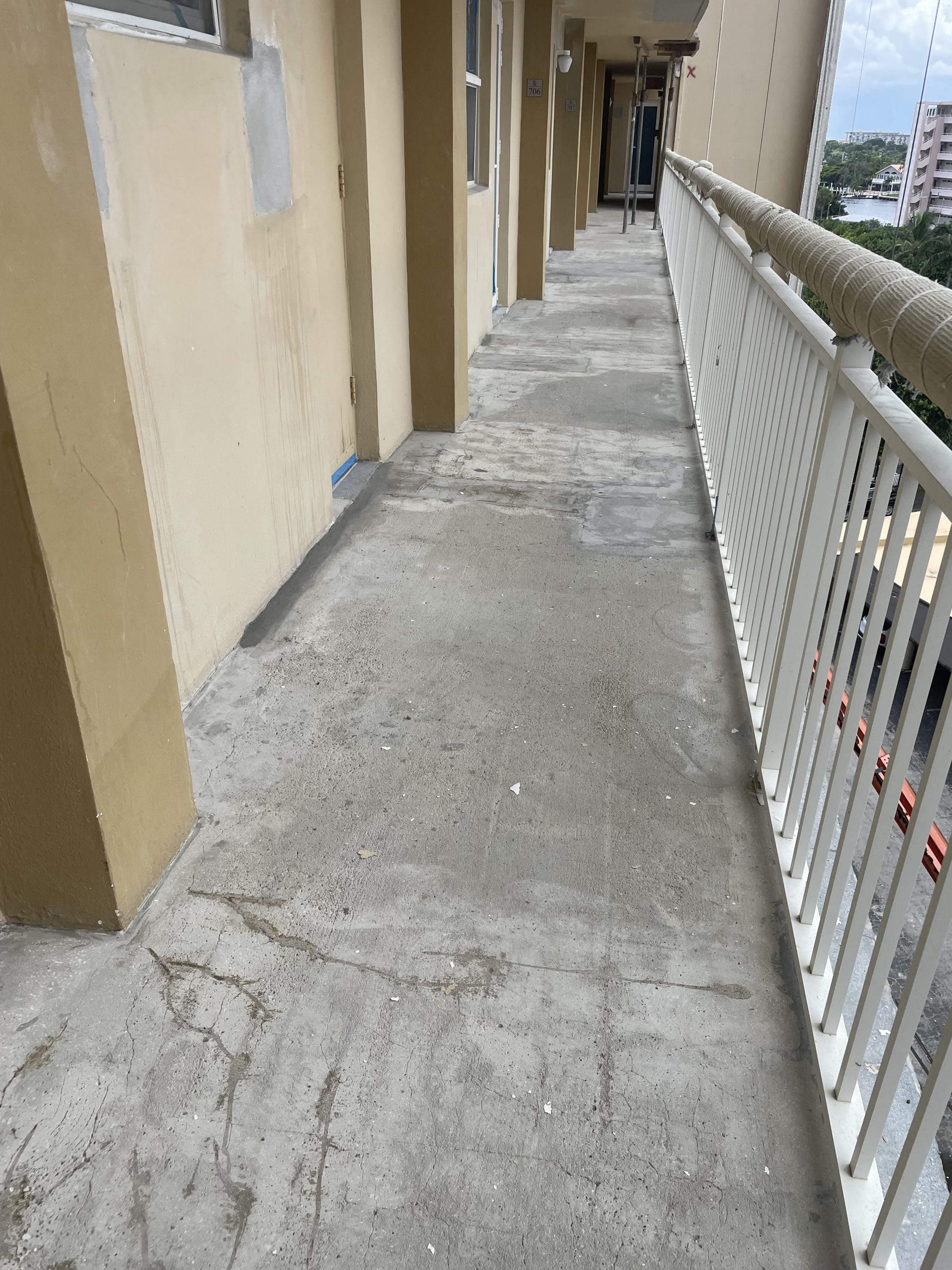
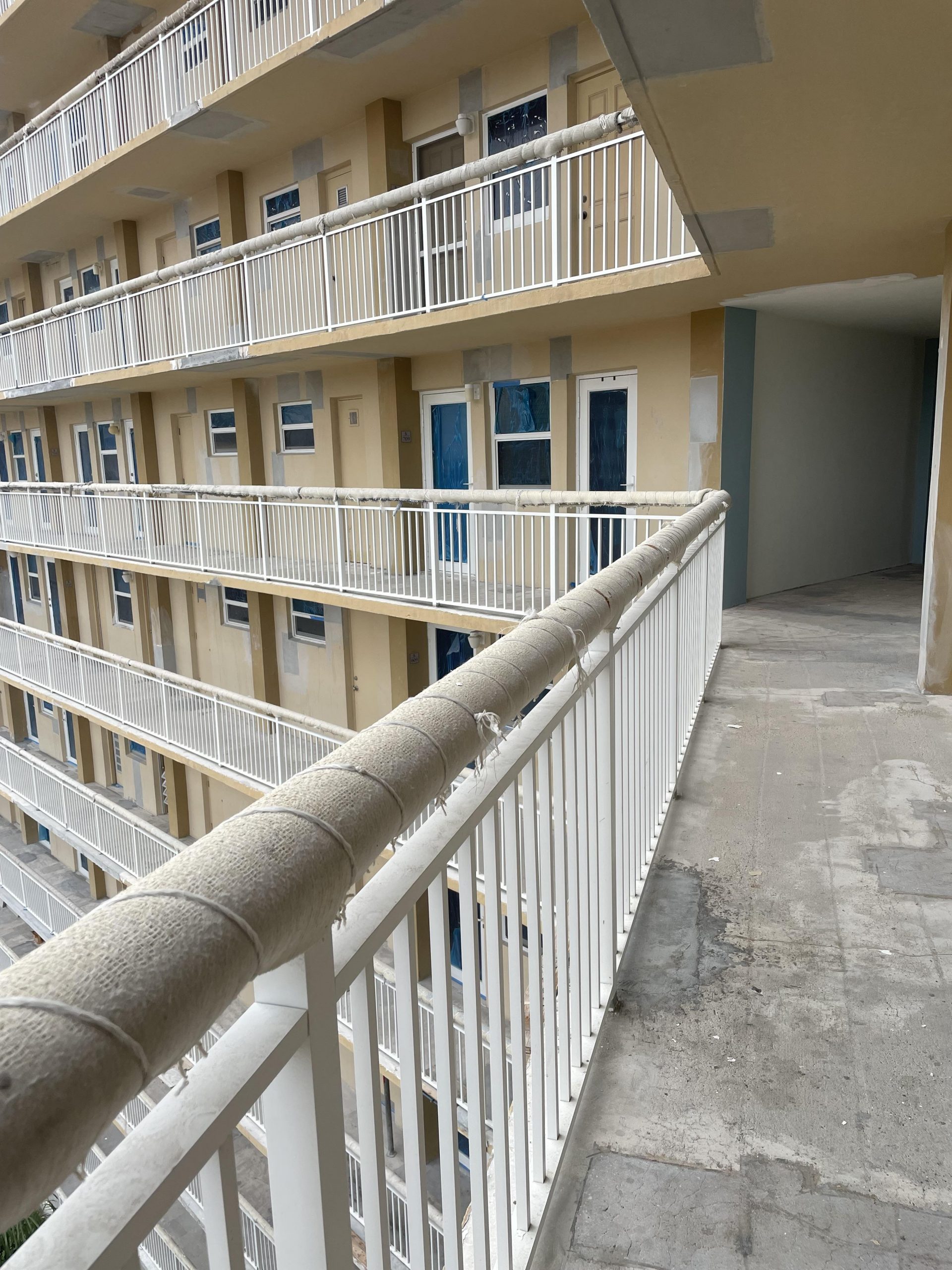
Concrete restoration being done on a building in Pompano Beach

MARKET ANALYSIS September 28, 2023

Start spreading the News: Florida Tops NY in Home Values

Start Spreading the News: Fla. Tops NY in Home Values

By Kerry Smith

Study: Fla. leaped past New York to be No. 2 in housing values, trailing only Calif. S. Fla. (No. 5) and Tampa (No. 18) made the “top 20 most valuable metros” list.

SEATTLE – The total value of the U.S. housing market surged more than $2.6 trillion over the past year, according to a Zillow analysis, largely due to rising home prices and the value of new construction.

Florida has been at the forefront of that value gain, according to the data used in the study. In the latest analysis of total real estate value, the Sunshine State took over the No. 2 spot, bumping New York State down to third place. California retains the top spot with more than $10 trillion of value – nearly 20% of the U.S. total.

In a list of the top 20 U.S. metros based on the total value of their real estate, two Florida metro areas make the list:

  • 5. Miami-Fort Lauderdale: $1,269.8 billion, up $100.5 billion since June 2022 – 8.6%
  • 18. Tampa: $521.1 billion, up $18.5 billion since June 2022 – 3.7%

While “total real estate value” is always a squishy concept – the equivalent of an automated appraisal for every piece of property in America – the trending changes don’t surprise many real estate professionals.

The total value of the U.S. housing market – the sum estimated value for every U.S. home – is now slightly less than $52 trillion, or $1.1 trillion higher than a previous peak reached in June 2022. A small chunk of that growth can be attributed to a 0.7% rise in the average value of a U.S. home during that time, but the main value change comes from new construction.

“A steady flow of new homes hit the market this spring and summer, helping chip away at the deep inventory deficit and boosting the total value of the market,” says Orphe Divounguy, Zillow senior economist. “Enough buyers remained to keep the market moving. … New home sales rose this year while existing home sales fell, and (new homes) should make up a bigger piece of the home sales pie for as long as rates remain elevated.”

The four most valuable metro areas have remained largely unchanged over the past five years: New York, Los Angeles, San Francisco and Boston. But a new entrant from Florida, Miami, claimed the fifth spot, jumping all the way from ninth as recently as May 2021. Miami’s value surge pushed Washington, D.C., out of the top five.

Metros gaining the most value

Of the six markets where housing gained the most value since the start of the pandemic, four are in Florida:

  • Tampa: Up 88.9%
  • Miami: Up 86.6%
  • Jacksonville: Up 82.4%
  • Orlando: Up 72.3%

Zillow attributes large population growth as one reason for Florida’s strong new construction figures, but stronger competition for existing homes also played a role.

California remains a behemoth with more than $10 trillion of value in its housing market; nearly 20% of the national total. Florida, New York, Texas and New Jersey round out the top five.

20 ‘most valuable’ metros and percentage changes since June 2022

  1. New York: Up 4.2 %
  2. Los Angeles: Up 0.1 %
  3. San Francisco: Down 8.8%
  4. Boston: Up 3.4 %
  5. Miami-Fort Lauderdale: Up 8.6 %
  6. Washington: Up 3.2 %
  7. Chicago: Up 6.9 %
  8. Seattle: Down 5.1 %
  9. San Diego: Up 1.0 %
  10. Dallas-Fort Worth: Down 0.3 %
  11. San Jose, Calif.: Down 5.2 %
  12. Phoenix: Down 2.1 %
  13. Philadelphia: Up 6.8 %
  14. Riverside, Calif.: Down 3.1 %
  15. Houston: Up 3.5 %
  16. Atlanta: Up 3.7 %
  17. Denver: Down 6.0 %
  18. Tampa: Up 3.7 %
  19. Sacramento, Calif.: Down 5.4 %
  20. Portland, Ore.: Down 4.0%

SOURCE: © 2023 Florida Realtors®

INSURANCE September 21, 2023

Citizens Customers Getting Buyout Letters this week.

Citizens Customers Getting Buyout Letters this Week

About 300K Fla. homeowners with Citizens – Fla.’s “insurer of last resort” – will receive a letter that automatically transfers them to a private insurer if they don’t respond.

MIAMI – A warning to Floridians with Citizens Property Insurance coverage: Check your mailbox. About 300,000 customers of the state-run insurer of last resort are receiving letters in the mail this month with an offer to switch to a private insurance company.

If customers don’t respond by Oct. 5, the letters state, customers will be forced to go with the private company – at a potentially far higher cost.

A Citizens spokesperson said Tuesday that the vendor hired to print the letters has been inundated by the volume, meaning some policyholders are getting less than the customary 30 days to respond. Although the letters are typically dated Aug. 28, as many as a third of customers received them much later. A notice sent to a Miami Herald editor was postmarked Sept. 13, for example.

Some customers still haven’t been notified. Between 10,000 and 15,000 letters were sent out Tuesday, but everyone should receive the letters by Friday, Citizens spokesperson Michael Peltier said.

Because of the problem, Citizens is extending the deadline to respond to Oct. 10. Insurance agents have been alerted to the delays, he said.

“The goal is always to give policyholders at least 30 days, but vendor issues prevented that from happening,” Peltier said. “Worst-case scenario is folks are going to have a couple weeks.”

If customers don’t respond in time, they could be in for an expensive surprise.

Eunic Epstein-Ortiz said she received a letter at her St. Petersburg home on Monday with an offer from Tampa-based Slide Insurance, a new startup company that has increased its footprint in Florida’s ailing property insurance market.

The offer from Slide was for a premium of $7,484 – 77% higher than the $4,227 if she stayed with Citizens, according to the notice she received.

The envelope bore no indications that an urgent deadline was inside, said Epstein-Ortiz, who ran for the state Senate last year as a Democrat representing St. Petersburg but lost.

“I am completely aware, our insurance system currently is not where it needs to be,” Epstein-Ortiz said. “But offloading 300,000 people, seemingly in the dead of night, with almost no notice, with no urgency to it, is not the way to do it.”

As insurance companies have folded or reduced their exposure in Florida in recent years, Citizens has seen its policy count grow to about 1.4 million, making it the largest insurer in the state.

To reduce Citizens’ policy count, state regulators this year have approved several companies, including Slide, to assume some of the state-run insurer’s policies. Customers don’t have to accept the private companies’ offers, but if the offer is within 20% of Citizens’ rate, customers who decline the offer can’t renew their policy with Citizens.

Policyholders who receive offers can make their choice through their agent or online at citizensfla.com/online-choice.

Asked whether she and her wife would take up Slide’s offer, Epstein-Ortiz’s response was an immediate “no.”

“Why would we go to another insurer with worse coverage for twice the price?” she said. “It makes absolutely no sense.”

SOURCE: © 2023 Miami Herald. Distributed by Tribune Content Agency, LLC.